Sleeves Are Structural, Not Optional
With real cards, sleeves are a choice. With proxies, they're load-bearing. A home-printed card has a white back or a different back entirely. That's the first thing anyone at the table notices. The right sleeve hides it completely. Your proxy is indistinguishable from the rest of the deck before the game starts.
The second reason: printed proxy cards are thinner than a real Magic card. (For the cardstock choices that close this gap as much as possible, see our best cardstock guide.) Real cards run 300-350 gsm with a black core layer. Most home printers top out at 200 gsm; plenty of popular cardstocks are 170 gsm or below. That thinness is noticeable in hand, and it makes the card harder to sleeve neatly. A double-sleeve setup (inner perfect-fit sleeve over the proxy, standard outer sleeve on top) compensates for it, adding thickness and rigidity until the card feels close to the real thing.
Neither problem is hard to solve. But you can't solve them with whatever sleeves are left on the shelf.
The Back Opacity Problem
The failure mode is a clear or translucent back. Standard Dragon Shield Mattes have a lightly frosted back. Fine for real cards, but with a proxy you can read the white through it under table lighting. That's worse than no sleeve.
What you need is full opacity: a back so dark and thick that nothing shows through. The category is labeled "dual matte" or "opaque back." Matte backs also prevent hotspots from showing through; glossy or translucent backs pick up any discoloration underneath.
Rule: if the sleeve back is not a solid, opaque color, skip it for proxies.
Outer Sleeves: What to Buy
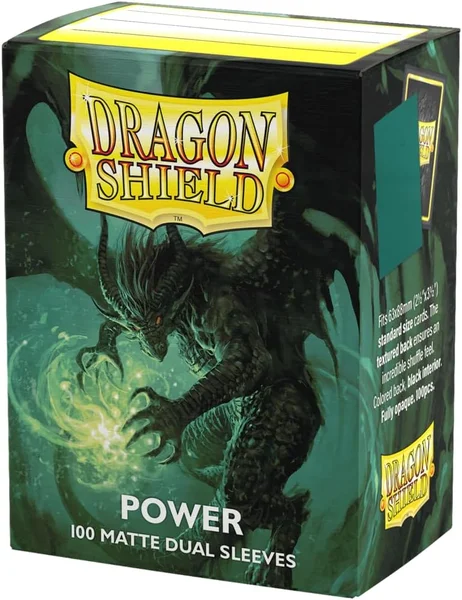
Best overall: Dragon Shield Dual Matte. The back is a dense, fully opaque matte black, no light transmission. At 120 microns per side, these are among the thickest standard sleeves, which means thin 170 gsm proxy stock sits inside without buckling. The sleeve is stiffer than competitors, which is exactly what makes a light card feel like it has weight. ~$9.50 per 100. They last years of regular shuffling.
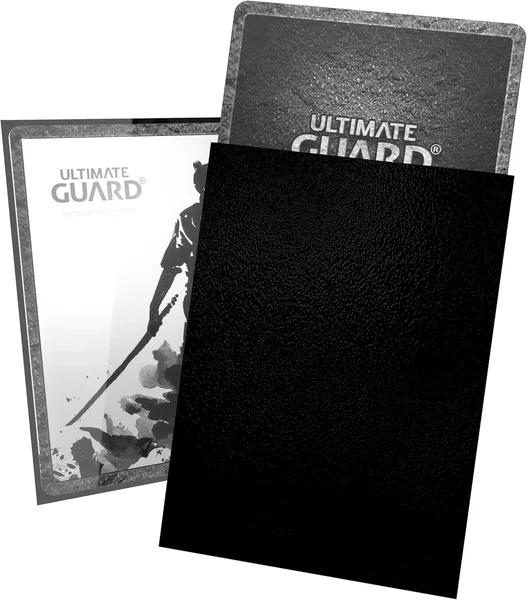
Best shuffle feel: Ultimate Guard Katana. The smoothest-shuffling premium sleeve on the market. 90/120 micron asymmetric construction, slightly thinner feel than the Dual Matte, same fully opaque back. Riffle shuffles, pile shuffles, mash shuffles all feel natural. ~$12 per 100ct. If you're running the same Commander deck for two years, the per-shuffle cost is nothing.
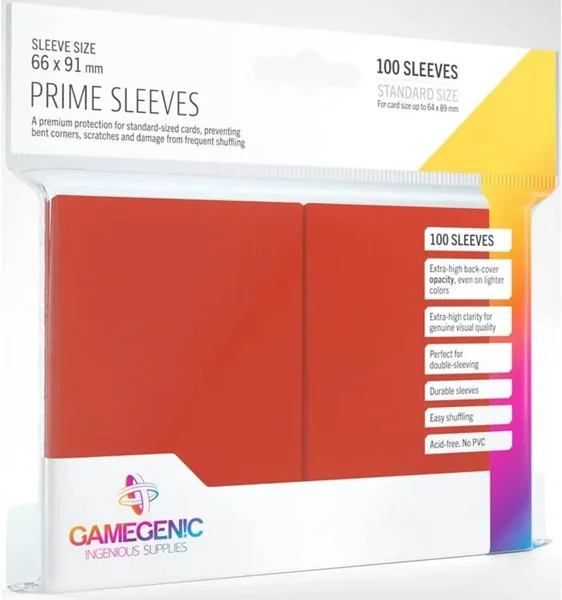
Best value: Gamegenic Prime. Full opaque back, good shuffle feel, strong color options, ~$7.50 per 100ct. The plastic feels slightly less rigid than Dragon Shield, not a problem for most players. The back opacity is identical.
Comparison Table
| Sleeve | Back opacity | Shuffle feel | Price/100ct | Double-sleeve friendly | Verdict |
|---|---|---|---|---|---|
| Dragon Shield Dual Matte | 10/10 | 8.5/10 | ~$9.50 | Yes | Best opacity + durability |
| Ultimate Guard Katana | 10/10 | 9/10 | ~$12 | Yes | Best shuffle feel |
| Gamegenic Prime | 10/10 | 9/10 | ~$7.50 | Yes | Best value |
| Ultimate Guard Cortex | 10/10 | 8/10 | ~$6.50 | Yes | Budget premium |
| Dragon Shield Matte | 6/10 | 8.5/10 | ~$8.50 | Yes | Not ideal, lower opacity |
The Double-Sleeve Setup
For proxy stock at 170 gsm or below, double-sleeving is worth the extra minute per deck.
Inner sleeve: Dragon Shield Perfect Fit Sealable. 63×88 mm clear inner sleeves that seat the card precisely with no loose movement. The sealable version closes the top edge, keeping the proxy from shifting when you insert it into the outer sleeve. Insert the card face-down before sealing so the sealed edge sits at the bottom and doesn't interfere with the outer sleeve opening.
Outer sleeve: Any of the three from the table above.
The result is a card with real weight, a consistent feel across the whole deck, and a fully hidden back. The outer sleeve takes all the shuffling wear; the inner sleeve and card stay protected.
Alternative inner: KMC Perfect Fit runs 64×89 mm, 1 mm larger on each axis. Easier to insert, fit is slightly looser. The outer sleeve holds everything in place regardless.
On 200 gsm or heavier stock, single-sleeving with a high-opacity outer is usually enough.
What to Avoid
Clear-back sleeves. Anything with a clear or lightly frosted back shows the proxy through it: standard Dragon Shield Mattes (the non-Dual version), Ultra Pro Standard, most no-brand packs. Check the product name for "dual matte" or "opaque back."
Sub-90-micron sleeves. Inconsistently sized. A cut proxy is often fractionally smaller or larger than a real Magic card, and a floppy sleeve bunches around it in ways that make a double-sleeved deck uneven. 90/120 micron is the floor.
Thin generics. They tear faster, show wear faster, and don't add enough structure to make thin proxy stock feel normal.
The Verdict
Densest opaque back and the stiffest body. The default for most players double-sleeving thin proxy stock.
View on Amazon
Smoothest-shuffling premium sleeve, fully opaque back. Worth it if you run the same deck for years.
View on Amazon
Identical back opacity at a lower price. Slightly less rigid, no real downside for most players.
View on AmazonFor a deeper look at how matte and clear finishes compare specifically with home-printed cards, see our matte vs clear sleeves breakdown.